
如何在首次通話前使用數據評估銷售候選人
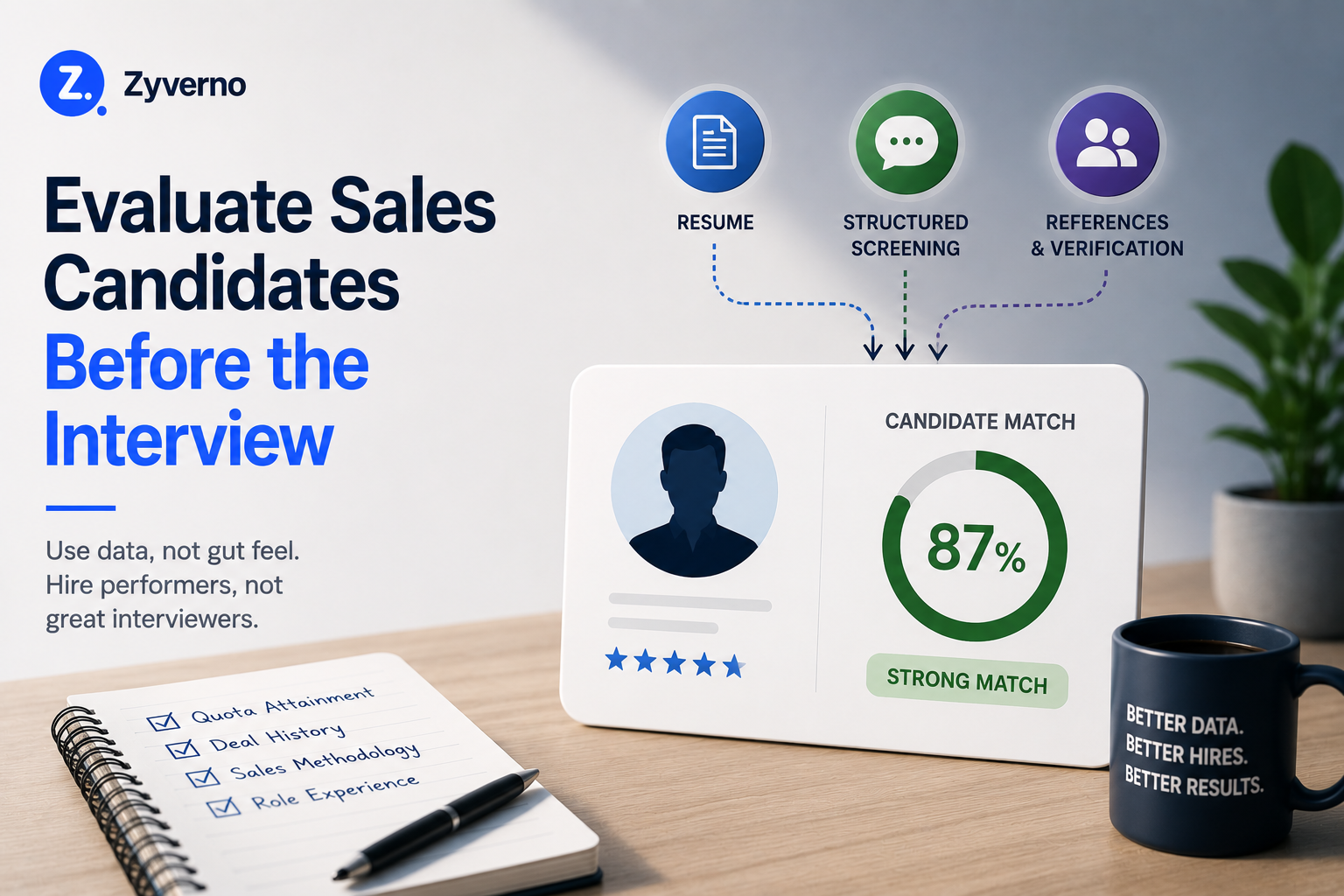
在面試中主要評估銷售候選人會選擇自信的自我展示。這種技能與尋找潛在客戶、管理管道和達成交易的能力重疊,但並不完全相同。數據驅動的面試前評估在任何人投入一個小時之前增加了客觀信號:關於業績歷史和角色特定資格的結構化反應,這在面試中並不會自然浮現。 本指南涵蓋了該收集內容以及如何利用它。
關鍵要點
- 面試偏向自信的自我展示,而非實際表現。面試前的數據在花費任何招聘人員的時間之前增加了一個客觀層面。
- 配額達成率是唯一最重要的面試前數據點,也是最常被忽略的。
- 簡歷評估應關注任期模式和量化成就,而非公司品牌或職稱。
- 參考電話是最可靠的面試前數據源,並且是使用得最少的;將其視為一次面試,而不是一個複選框。
- 面試前的數據改變了面試本身:它使得提出針對性、具體性問題成為可能,而不是一般背景審查。
在面試前你可以收集哪些數據
針對銷售候選人的面試前數據有三個來源:
1. 申請和簡歷。 包含職業歷史、角色名稱、公司、任期,以及候選人選擇包含的任何量化成就。作為基線是有用的,但自我報告和自我策劃。
2. 結構化篩選反應。 針對銷售表現、方法論和角色特定經驗的具體問題的回答。這些回答可以通過聊天、語音或書面調查收集。與簡歷不同,這些回答是專門為該角色生成的,揭示了候選人的思維和溝通方式。像 Zyverno 這樣的工具自動收集這一層:Lina通過語音或聊天向每位申請者提問相同的結構化問題,對反應進行評分,並在任何招聘人員花費時間之前提供排名的檔案。
3. 參考和驗證。 配額達成率、相對於同行的業績和具體交易歷史,通過與候選人合作的第三方確認。最可靠的來源,也是最常被忽略的。
每個來源回答不同的問題。共同使用時,它們形成的檔案比單靠簡歷顯示的內容更深刻。
How Easy Is Each Data Source to Manipulate?
Candidates can control what they present, but not equally across all three sources. Understanding which signals can be coached against changes how you weight them.
Resume and application
Easiest to curate
The candidate chooses what to include, how to frame it, and what to leave out. There is no real-time pressure. A professional resume coaching industry exists to optimize every line of language. Treat resume claims as hypotheses to verify, not facts to rely on.
Structured screening responses
Harder to coach
Responses are generated in real time to specific questions the candidate can't fully predict. Nervous hedging, vague language, and inconsistencies surface naturally under specific questioning. A coached candidate can still give strong answers, but coaching to all six screening questions is difficult. High signal for communication quality. Medium signal for factual claims about performance.
Reference calls
Hardest to control
The candidate controls only who they submit as a reference, not what the reference says. A well-structured question like "Would you hire them again?" is very difficult to coach against. The reference is a third party with no incentive to be protective. Highest signal for factual performance claims. A reference who speaks only in generalities is itself a signal worth noting.
簡歷:該使用什麼和該忽略什麼
大多數針對銷售角色的簡歷評估都集中在公司品牌和職稱上,這是可用的最不具預測性的組合。
從簡歷中應使用的內容:
任期模式。 在最近的四個銷售角色中,每個角色都在12個月內的候選人,值得深入了解。在某些情況下,它反映了晉升或公司倒閉。在其他情況下,它反映了表現問題或未能迅速適應。直接問問。
公司銷售背景。 這是一個有高增長初創企業,有流入線索和短銷售周期,還是出售複雜採購流程的成熟企業?所需的技能是不同的。交易規模、周期長度和銷售方式影響候選人形成的能力。
量化成就。 當候選人寫“在2024財年超額完成配額140%”時,這是一個值得調查的聲明。當他們寫“負責管理東部地區”時,這是一個沒有任何表現信息的描述。沒有量化結果的簡歷缺少最相關的信息。
應最小化的內容:
- 學校或學位,除非該角色有直接與學術背景相關的技術知識要求。
- 不具量化的獎項和認可(例如,“頂尖表現者”而沒有說明這意味著什麼)。
- 職位功能描述用不同的詞重複發布的工作。
結構化篩選:產生有用數據的問題
在招聘人員電話之前提供的結構化篩選問題,將目前在每個電話篩選前20分鐘中進行的信息收集轉變為可擴展審查並可比較候選人的格式。
產生針對銷售候選人的最具差異化的數據問題:
配額和達成率: “你最近角色中的配額是多少?你在過去的完整一年中達成了百分之幾?”
這是銷售面試前評估中最重要的問題。候選人的回答是自我報告的,但創建了一個參考點。後續問題:通過參考電話核實。
管道生成: “在過去12個月中,你關閉的獲勝交易中有多少百分比是你自己發掘的(而不是來自流入或銷售開發代表生成的線索)?你是如何產生它們的?”
這可以分隔能夠銷售的代表與在機會交給他們時仍能銷售的代表。兩者都有價值,但不是同一類型。
交易複雜性: “在過去18個月中你關閉的最複雜的交易是什麼?描述參與的利益相關者、時間線,以及你需要做什麼來推進它。”
這個回答的具體性和質量揭示了候選人是否具有真正的企業銷售經驗,或是使用複雜的語言描述了更為交易性的過程。
挫折恢復: “請講述一個你自信能夠達成但失敗的交易。發生了什麼,你接下來做了什麼?”
那些對損失有清晰敘述的候選人,或者描述損失完全超出自己控制的候選人,都是值得調查的信號。優秀的候選人描述具體的錯誤、具體的學習和具體的行為變化。
適合動機: “是什麼特別吸引你這個角色?你在當前或最近的角色中,什麼是不適合你的?”
這不是一個溫和的問題。這是一個數據問題。能夠具體闡述這個角色如何符合他們職業軌跡以及他們正在追求的(而不僅僅是逃避的)候選人,思考得比給出一般答案的候選人更加仔細。
面試前評估工具
結構化篩選反應是一層數據。評估工具添加了獨立於自我報告的第二層。
認知和能力評估。 像Wonderlic這樣的工具測量推理能力和學習速度,預測在具有學習曲線的角色中的表現。對於擁有複雜產品或長期銷售周期的銷售角色,認知能力是提升速度的有意義預測指標。
情境判斷測試。 這些為候選人提供現實的銷售場景並詢問他們將會怎麼做。回答揭示了判斷力和決策方法。為你特定銷售行為(企業與交易、流入與流出)校準的情境判斷測試產生的信號,比一般的銷售能力測試更相關。
角色特定技能練習。 對於銷售角色,這通常意味著冷撥電話角色扮演、發現電話模擬或交易策略練習。這些不是篩選工具(它們需要人力時間進行評估),但它們比大多數面試問題更具預測性。
最佳方法是結合多種數據來源。關於結構化招聘的研究一致表明,結合認知能力、相關經驗數據和工作樣本練習產生的績效預測要比任何單一來源的預測更準確。
構建可比較的數據
面試前評估在數據結構足夠以便於候選人之間比較時最有用。這意味著以相同格式提問相同的問題,將反應與已定義的評分標準進行評分。
關於配額達成率回答的簡單評分標準:
What Each Score Sounds Like in a Real Screening Response
The rubric tells you the criteria. These examples show the rubric applied to actual language, with the specific signals that determined each score.
Strong signal
Specific number, 90%+ attainment, context offered
"My quota was $840K in new revenue. I hit 112% in the last full fiscal year, so $943K closed. That was in enterprise software, average deal size around $180K, five to seven month sales cycle. The territory was mostly financial services accounts, 12 strategic targets plus inbound."
Signals present
Exact dollar quota stated. Attainment above 90%. Deal size and cycle length offered without being asked. Territory type named. The candidate explains the conditions that shaped the result, not just the outcome number itself.
Usable signal
Specific number, 70%+ attainment, limited context
"I was above quota last year, I think around 105%. My quota was roughly $600K. I was in a software sales role, mostly mid-market accounts."
Signals present
Specific if approximate number. Attainment above 70%. Limited context: deal size and cycle length not mentioned. Worth exploring in the interview. The "I think" qualifier is worth noting but is not a disqualifier on its own.
Weak signal
Vague, no number, or attainment below 70% without explanation
"I've always been a top performer. I consistently hit or exceeded my targets. Last year was a tough market for everyone, which affected the numbers, but my manager was very happy with my results."
Signals present
No specific quota figure. No attainment percentage. External attribution for the gap. "Top performer" stated without any number to support it. Ask directly in the interview: what was the actual quota figure, and what did you close?
No performance data available
No response or disclosure refused
"I'm not able to share specific numbers due to a non-disclosure agreement with my employer."
What to do
No performance data from this source. This answer is legitimate in some enterprise roles where non-disclosure agreements cover compensation structure. Do not assume it is a red flag. Weight the reference call more heavily and ask the reference directly for quota and attainment figures.
- 3分:提供具體數字,達成率超過90%,提供上下文(交易規模、周期、地區類型)。
- 2分:具體數字,達成率超過70%,上下文有限。
- 1分:模糊(“頂尖表現者”)或達成率低於70%而沒有上下文。
- 0分:沒有回應或無法提供數字。
這不是最終決定。它是一個比較工具。得分為2的候選人与得分為3在管道生成和交易複雜性方面的候選人之間是不同類型。結構化數據為該比較提供了基礎,在任何人花費一個小時在同一房間之前。
在面試中使用數據,而不僅僅是在之前
面試前數據改變了面試本身。當招聘人員和招聘經理已經審核了結構化篩選反應時,面試不需要收集篩選已經捕獲的信息。
而不是:“告訴我你的銷售背景。”
問題變為:“你提到在你上一个角色中,你通過外部生成了60%的管道。你具體是如何打入沒有與公司建立關係的客戶的?”
面試前的數據使面試更加針對性,高效和揭示性。
How to Interpret the Answers You Get
The article shows which questions to ask. This shows what different answer types reveal, so you know what you are listening for after each data-driven follow-up question.
Pipeline generation
After asking: "You mentioned X% of your pipeline was self-sourced. How did you generate it?"
Strong positive signal
They lead with volume: calls made, emails sent, sequences run
Process-oriented seller. Reliable for outbound roles with clear activity targets. May struggle when the path to pipeline is not pre-defined and requires them to create their own approach from scratch.
Strong positive signal
They lead with a specific account type, persona, or trigger event
Target-oriented seller. Better fit for complex or enterprise selling where quality of outreach outweighs volume. They think about who to contact before thinking about how many to contact.
Explore further
They cannot explain specifically how they generated the pipeline
The pipeline may have come primarily from inbound leads or sales development representative hand-offs they are now attributing to their own outbound effort. Ask directly: "What percentage came from accounts you identified yourself versus leads that were assigned to you?"
Quota attainment follow-up
After getting their attainment number, watch what they do next without prompting
Strong positive signal
They immediately add deal size, cycle length, or territory context
They understand what drove performance, not just what the outcome was. This is a seller who can self-diagnose. Easier to coach because they can identify variables independently.
Strong positive signal
They compare themselves to team average without being asked
They track their own relative performance, not just the absolute number. A rep who knows they were third out of twelve understands how they fit into a competitive environment.
Explore further
Low attainment attributed entirely to external factors
Bad market, management changes, product gaps. These can all be real. But a rep who cannot name their own role in a miss is harder to develop. Ask: "What did you change about your approach in response to those conditions?"
Flag
They get defensive or change the subject
The number is likely unfavorable and they know it. This is not disqualifying on its own, but it does suggest the screening response number may have been optimistic. Weight the reference call heavily before advancing.
Deal complexity
After asking about a specific complex deal they described in screening
Strong positive signal
They name specific stakeholders by role and describe what each person cared about
Genuine multi-stakeholder experience. They were not just present in the deal. They were navigating it. The ability to name what the head of finance cared about differently from the operations lead is not something that can be fabricated convincingly.
Explore further
They describe the deal as a series of things that happened to them
They were present in the deal, but may not have been driving it. Ask what they did specifically to advance each stage. If they can't name a moment where they changed the deal's direction, they were likely not in the driver's seat.
Explore further
The deal they describe is significantly smaller or shorter than what this role requires
A good sign when deal size and complexity match. If their most complex deal is materially below what this role demands, ask why. The gap may be role structure, not capability, but you need to know which before advancing.
這還使得候選人更難重新框定他們的背景,因為面試官已經知道了具體情況。對於評估面試中的銷售技能的結構化方法,將面試前的數據與正確的室內問題相結合,可以提供候選人最準確的評估。
參考電話作為數據
參考電話是最可靠的面試前數據源,且被最少使用。大多數公司將其視為一個複選框。使用得好的公司將其視為一次面試。
針對銷售候選人的有用參考電話問題:
“這個人在你們一起工作時的配額是多少?他們達成了多少?”
“在你管理生涯中,你會將他們排在所有代表的哪個位置?最高四分之一?最高一半?”
“這個作為銷售人的人的主要優勢是什麼?什麼限制了他們的表現?”
“如果有合適的角色,你還會再雇他們嗎?”
最後一個問題的答案比前面問題告訴你更多。
Reference Call Answer Guide
Four questions to ask every sales reference, and how to read what you hear
"What was this person's quota, and what did they attain?"
Specific number, matches what the candidate said
The reference answers without hesitation and the figure aligns with or exceeds the candidate's own claim. Confirms consistency under third-party questioning.
Vague, deflects, or contradicts the candidate's claim
"I'm not sure of the exact number" from a direct manager is a flag. So is a figure that is meaningfully lower than what the candidate reported in screening.
"Where would you rank them among the sales representatives you have managed in your career? Top quartile? Top half?"
Clear quartile answer with a specific comparison
"Top 10% of everyone I've managed" or "best on the team by revenue in year two." The reference has enough conviction to give a number, not just a compliment.
Hedges the ranking or pivots to personality
"Hard to say, everyone has different strengths" or an immediate pivot to attitude and coachability. Praising character while avoiding performance ranking is a pattern worth probing.
"What was their primary strength as a salesperson? What held them back from being even better?"
Specific strength and a real, bounded limitation
"Best at discovery, sometimes rushed the close" or "strongest on outbound, less patient with long procurement cycles." A specific strength plus a genuine limitation that does not disqualify them is a sign the reference is being honest.
Only positives, or the "limitation" is a non-answer
"They could sometimes be too driven" or "nothing held them back, really." A reference who cannot name a single real limitation is either protecting the candidate or has not managed them closely enough to know.
"Would you hire them again if you had an appropriate role?"
This question tells you more than any of the others combined.
Immediate and unconditional yes
"Without question" or "I actually tried to rehire them last year." No hesitation. No qualifying conditions. A manager who has managed someone through real difficulty and would still take them back is giving you the clearest signal available.
Pause, a conditional yes, or a redirect
"It depends on the role" or a long pause before answering. Redirecting to a positive memory instead of answering the question directly is an answer. A conditional yes from a former direct manager is a signal to take seriously before advancing to an offer.
一個具體信號:在參考電話中,某人談得很籠統(“態度很好,努力工作,真的很可塑”),而沒有任何具體的表現數據,值得注意。它們可能意味著引用者的保護,或者意味著候選人的成就不引人注目。任何一個信號都值得調查。
數據不能告訴你的事情
面試前的數據評估揭示了值得交談的候選人。它並不能決定雇佣。
在人類互動中僅顯現的事情:
- 候選人在真實時間中如何應對壓力。
- 他們的存在感、能量和溝通風格是否符合角色的要求。
- 對於這一具體機會是否存在真正的動機,還是僅僅是一般性的求職。
- 他們如何對待在招聘層次較低的人(通常比對待招聘經理更加揭示)。
面試前的數據是資格層。面試是評估層。兩者都是必要的。改善數據層的目的在於使評估層更精確,而不是替代它。
常見問題
詢問候選人有關其薪酬歷史是否合法?
在許多美國州,詢問以前的薪酬歷史受到限制或禁止。詢問配額和達成情況不同:它是關於表現指標的,而不是薪酬。如果不確定,請諮詢當前的州特定要求和法律顧問。
如何處理拒絕提供配額數字的候選人?
一些候選人,特別是那些與企業角色簽有保密協議的人,可能無法分享具體數字。這是合理的,不應被視為自動的取消資格。在這種情況下,請詢問相對於同行的表現(“你是否高於、處於或低於團隊平均水平?”),並更重視參考電話信息。
應該問多少個篩選問題?
對於銷售開發代表或內部銷售角色:4到6個有針對性問題。對於客戶經理:6到8個。對於經理:6到8個,但重點不同。超過10個問題會使完成率下降。如果您不能在8個問題中對候選人進行資格審查,那麼問題需要更加精準,而不是更多。
是否應該對每個銷售角色使用相同的篩選問題?
不可以。問題應反映角色的特定銷售方式。銷售開發代表的篩選關注外部活動紀律和早期管道信號。客戶經理的篩選關注於交易複雜性和配額達成率。銷售經理的篩選關注團隊發展和指導方法。對所有三個角色使用通用的銷售篩選會產生過於粗糙的數據而不能有用。