
How to Improve Quality of Hire Before You Hire Anyone
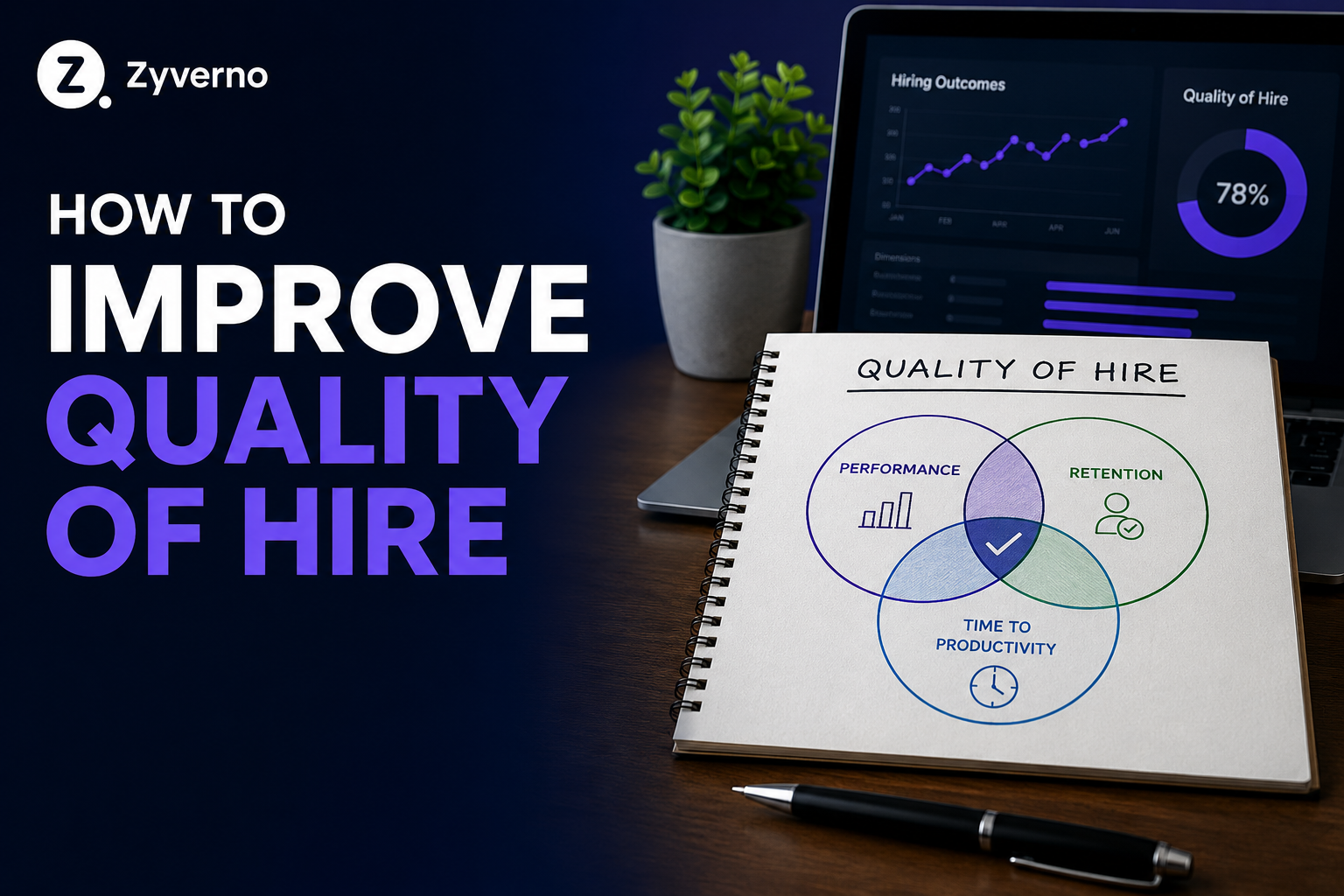
Quality of hire is how well your new people perform and how long they stay once they are in the role. Most teams try to raise it at the interview. The real leverage sits earlier.
Define what good looks like before you post the job. Hold every candidate to that same bar. Then measure what happens after they start, and feed it back into the next hire.
What quality of hire actually measures
What Makes Up Quality of Hire?
Quality of hire is measured after someone joins the company—not during the interview.
Quality of hire is not a gut feeling about a candidate. It is a post-hire measure of how the person actually worked out.
It combines a few signals from the first year: performance against the role's goals, whether they stayed, and how fast they got productive. A great interview that ends in a quick exit is not a quality hire, however good it felt at the time.
Why so few teams get it right
Everyone Wants Better Hiring. Few Measure It.
The biggest challenge isn't knowing quality of hire matters. It's tracking whether you're actually improving it.
Most companies are trying to improve quality of hire without consistently measuring it.
Almost everyone agrees quality of hire matters. Far fewer can actually measure it.
According to Aptitude Research, more than 60% of companies call improving quality of hire their greatest recruitment challenge. Yet only 26% have a formal way to measure it. Most teams are trying to improve a number they never track, which is why it drifts.
How to improve quality of hire
Better Hiring Starts With One Standard
The biggest difference isn't better interviews. It's evaluating every candidate the same way.
❌ Gut-Based Hiring
✅ Structured Hiring
You improve quality of hire by making the process consistent and evidence-based, from before the role opens to after the hire starts. Four moves do most of the work.
Define what good looks like before you open the role
Write down the outcomes the hire must deliver and the signals that predict them. Do this before applications arrive, not after. A shared standard is what stops every reviewer from judging by a different gut feel. Build it like a hiring scorecard, with weighted must-haves rather than a wish list.
Screen every candidate against the same bar
Quality drops the moment two candidates get judged by different standards. Consistency at the screening stage is the biggest single lever, and the hardest to hold by hand at volume.
A frontline hiring platform like Zyverno screens every applicant against the same criteria and scores them the same way. The standard does not slip on the five-hundredth resume.
Bring the hiring manager in early
Recruiters and hiring managers often picture different people for the same role. Align on the standard before sourcing, not at the debrief. A five-minute agreement upfront prevents a shortlist full of the wrong strong candidates.
Measure after they start, then feed it back
Pick two or three post-hire signals and track them over the first year. Then trace strong and weak hires back to how they scored at screening.
The short version
Quality of hire is won before the job opens and confirmed long after it closes. Define good upfront, hold every candidate to the same bar, bring the manager in early, and measure what happens next. Do that and hiring stops being a gamble on who interviewed well. It becomes a process that gets sharper with every hire.
Frequently asked questions
Related articles
"AI will make recruiters obsolete." Myth or Reality?
Discover how AI is transforming recruitment by handling repetitive tasks, allowing recruiters to focus on talent and relationships. Learn more with Zyverno.
generalHow to Improve Candidate Experience: A Practical Guide
Discover how to improve candidate experience with speed, clarity, and respect in your hiring process. Build better connections today!
generalHow to Reduce Candidate Ghosting in the Hiring Process
Discover effective strategies to reduce candidate ghosting during hiring. Improve communication and streamline your recruiting process with Zyverno.